
Touch, sound and sight
What we do: textures, sounds and high-contrast objects sized for a small hand to actually hold. What you might notice: longer visual tracking and calmer, more focused engagement with objects.
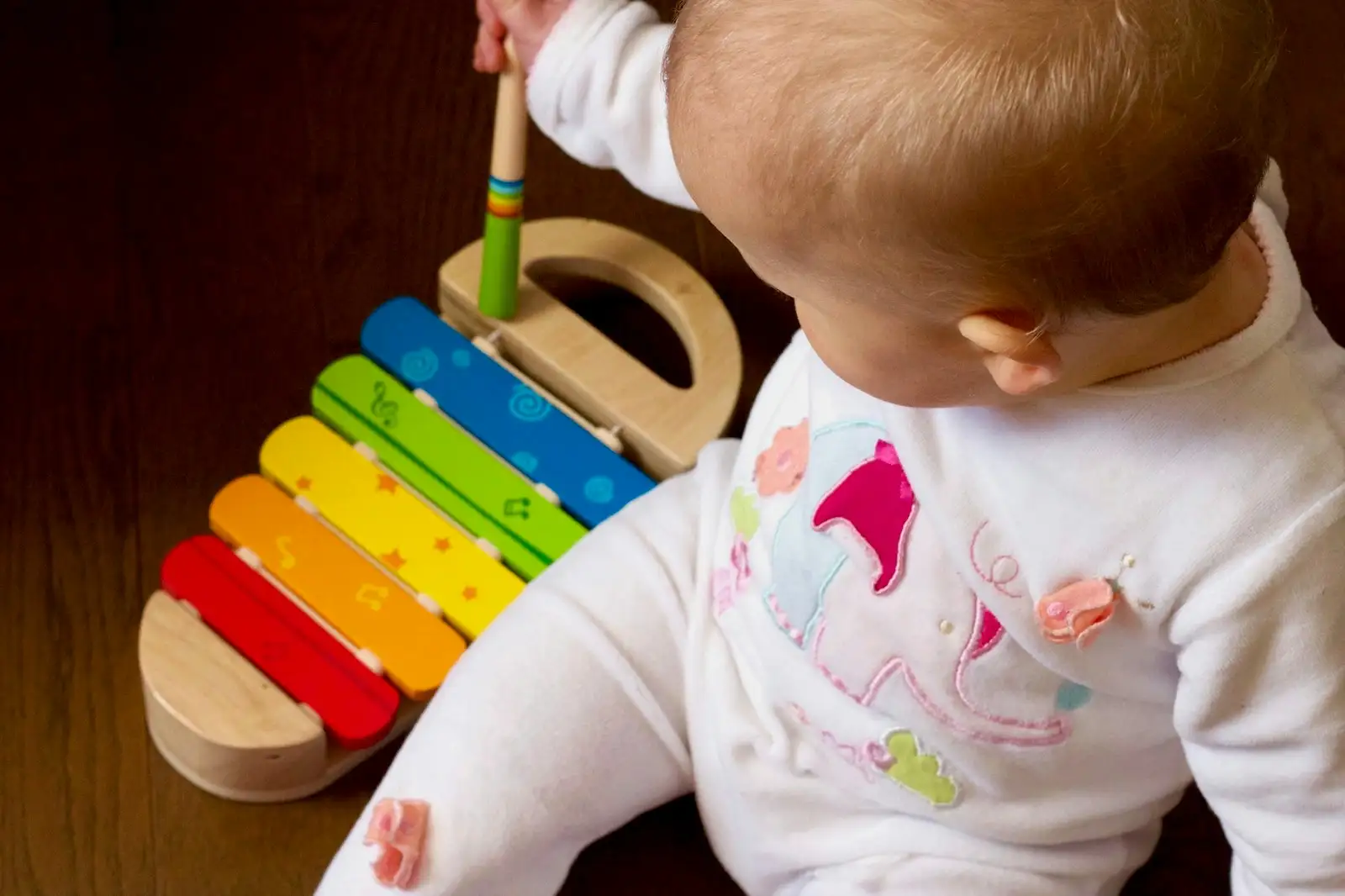
You know the small signals. The look that says “I’m tired.” The hand reaching for one more. You tell us, and those details come into the room with your baby. Infant care 5 days a week, with diapers, formula and meals included.
In a first room, the everyday care is the learning. Every feed, nap and diaper change is a chance to build trust, words and movement.
Babies learn to trust the people who come back. We hire teachers we mean to keep, so your baby sees the same faces each morning, and those faces learn your baby’s signals.
Babies nap when they’re tired and eat when they’re hungry, never on a group clock. A baby whose needs are met learns the world can be counted on. Always on their back, in a bare crib, the way Texas licensing and pediatricians require.
Babies learn language long before they speak, from hearing it, close up and about what’s happening to them. So teachers say what they’re doing as they do it: “Here’s the warm cloth. Now your left foot.” A diaper change becomes a conversation, and first words grow out of thousands of them.
Babies build strength and coordination by moving on their own: rolling, reaching, scooting, pulling up. So awake time is mostly on the floor, with low shelves and safe things placed just out of reach, rather than in seats or swings that hold a baby in place. Each baby gets there in their own time.

What we do with babies, and what you might start to notice. Every baby grows on their own timeline, so these aren’t promises or a checklist.
You won’t have to take our word for it.
Photos and notes on your phone as the day happens: feeds, naps and the small firsts.
A photo by the growth chart on the wall, so you can watch the change month to month.
A short development checklist (the Ages & Stages Questionnaire), then a written progress report and a sit-down conference with your baby’s teacher, each fall and spring.
A Year in Review of your child’s year, made just for your family.
Babies explore when they feel safe. Teachers talk to each baby through every feed and change. They offer safe things to touch and hear, and give babies time to move.
A sample day, from drop-off to pickup. Feeds, naps and care always follow your baby, so the times are only a guide. We’re open 6:30am to 6:00pm, and every hour is included.
Doors open at 6:30. A calm handoff and a short family note help the day begin with familiarity.
Feeding on each baby’s own schedule, held and unhurried. Older babies eat from our own kitchen.
Tummy time and reaching. Soft, bumpy and crinkly things to hold, and bold black-and-white pictures to look at.
A nap on their back, in their own bare crib.
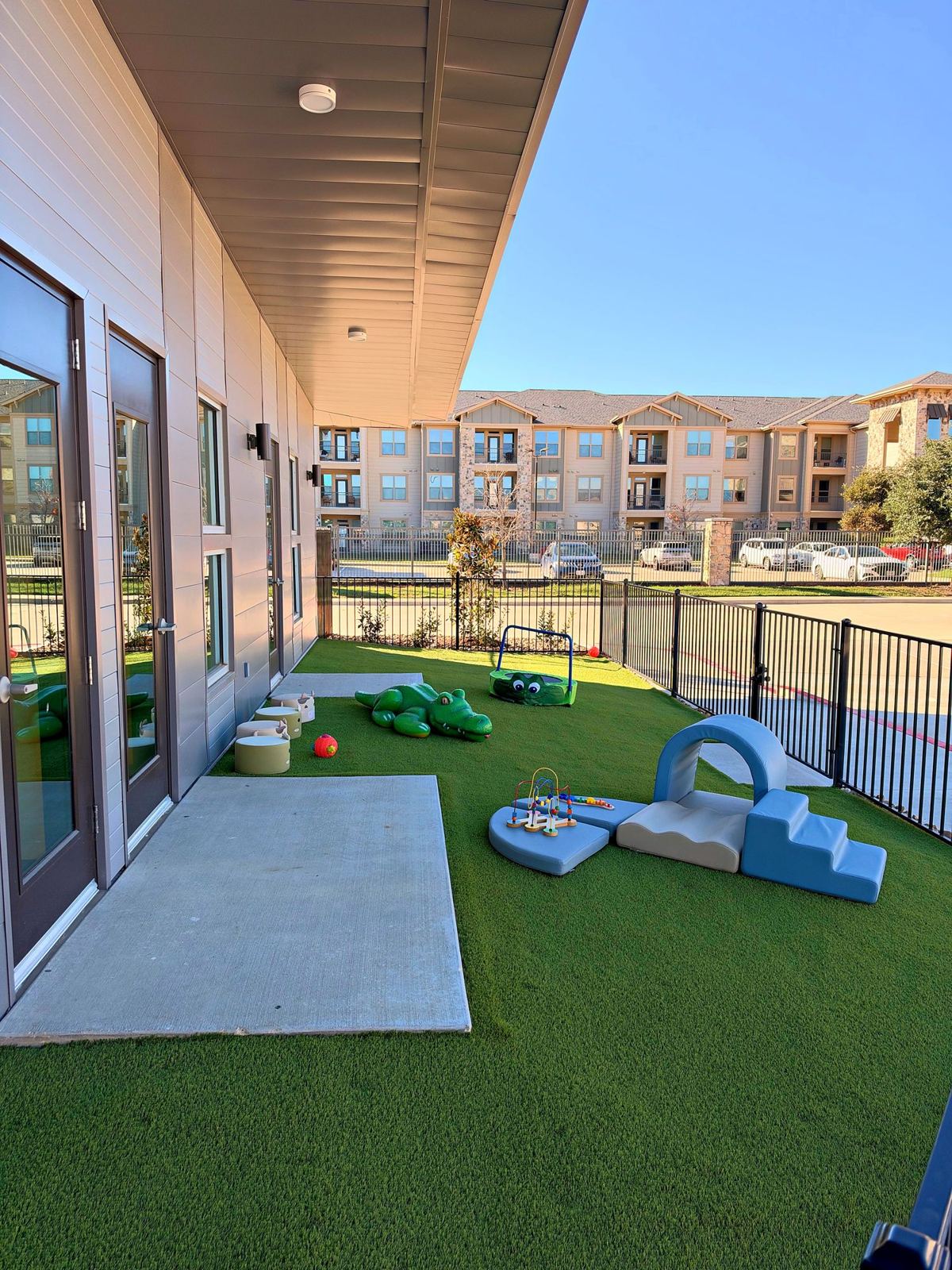
Shaded time outside: on a blanket for the youngest babies, a stroller ride around our own garden for babies who can sit up.
A warm meal or bottle, with older infants easing toward family-style eating at the table.
A second nap, again on the baby’s own rhythm, while others explore quietly nearby.
A second time outside in the shade: on a blanket, or a stroller ride around the garden.
Face-to-face games, songs and shared books, and supper for babies eating solids.
A quick talk about the day in person. The photos and notes are already in your app.
Every change and feed is logged and shared to your app.



Our own cook makes a hot breakfast, lunch and supper, plus snacks, here every day. When your baby starts solids, usually around 6 months and always when you do, the food comes from our kitchen.
You fill in a feeding plan at enrollment. We follow it, and update it with you as your baby grows. Breastmilk is welcome. Teachers use paced bottle-feeding that follows your plan. The monthly menu is posted in the parent app.
See our menu


Babies put everything in their mouths and spend the day on the floor.
The questions parents ask most about a first room. Ask us every one of them on your tour.
Each baby naps in their own crib, when they’re tired. Always on their back, in a crib with nothing else in it.
Feeds and naps follow each baby individually, and every feed, nap and change is logged and shared to your app. Older infants eat meals from our own kitchen. You fill in a feeding plan at enrollment, and we update it with you as your baby grows.
1 teacher for every 4 babies under age 1, with no more than 8 in a room, and 1 for every 5 from 12 months, with no more than 10.
Photos and notes reach your phone all day: feeds, naps, changes and little milestones. We talk it through at pickup too. Ask to see a real daily update on your tour.
Because most of infant tuition is the teacher: one for every four babies. Formula is a small part of it, and every baby moves on to food from our kitchen within months. One price keeps it simple and fair for every family. If your baby needs a specialty formula for a medical reason, send it; nothing about your tuition changes.
Every teacher is background-checked and CPR-certified, and most hold a CDA credential. Infant teachers also finish safe-sleep and shaken-baby prevention training before their first day.
Babies from 6 weeks to 18 months. The first day is a full day, with updates on your phone all day.
Outside twice a day in the shade: on a blanket for the youngest babies, and a stroller ride around our own garden for babies who can sit up.
A 30-minute tour of the rooms and the garden. Bring your real questions.
Montessori from 6 weeks through Pre-K, after school to 13, and Labs from 4 to 17 (opening 2027), in the same building in Katy.
Montessori from 6 weeks to Pre‑K, after school to 13. Year‑round.
Maker lab, ages 4–17, opening in 2027.
Ages 4–5: Pre-K by day; Little Labs after class once the lab opens in 2027.
STEMROOTS Montessori
Replies within the hour, 7am to 9pm
Hi, I’m Ms. Pari, one of the founders. Ask me anything: hours, a tour, when your child could start. I’ll text you back from 346-558-9867.


